
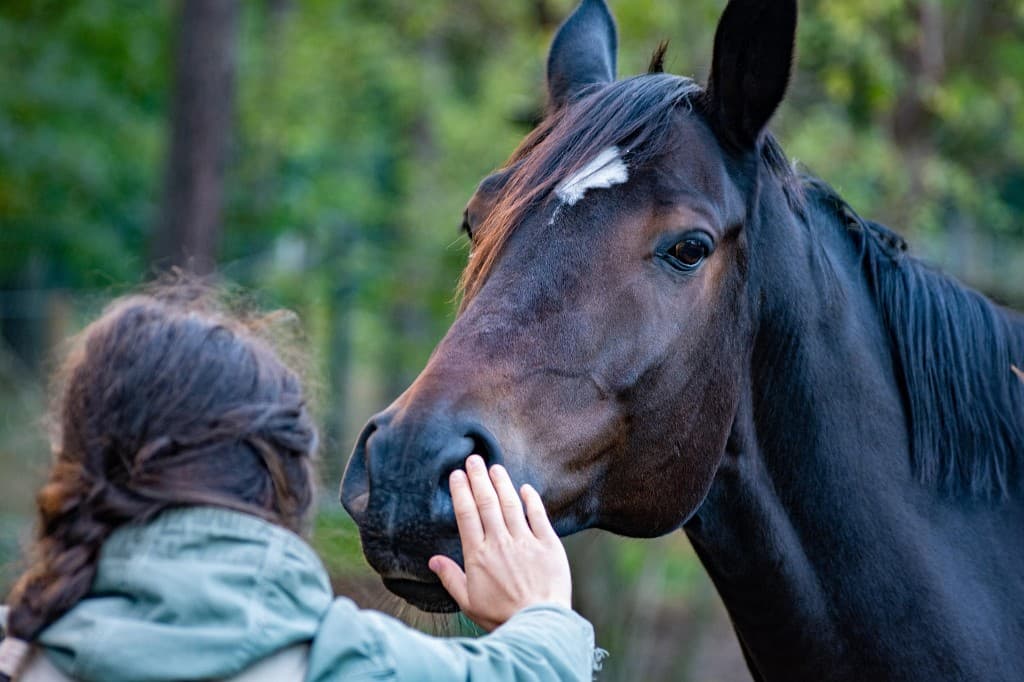
The share of older horses in the horse industry is steadily rising.
The share of older horses in the horse industry is steadily rising. An American study found that geriatric horses among clinical admissions rose from 2.2 per cent in 1989 to 12.5 per cent in 1999 – almost a sixfold increase in ten years. Researchers now define a horse as 'ageing' at 15 and as 'very old' at 30 or above.
It reflects a broader trend: horses are increasingly kept as lifelong companions rather than purely as working or competition animals, in part because of the strong relationship that develops between horse and owner over long years of ownership.
An American survey of equine-assisted therapy organisations found that musculoskeletal ill-health, behavioural problems and other health issues were the most common reasons horses were retired. The study also noted that research into exactly which health problems sit behind retirement could help shape preventive strategies that extend horses' working lives.
Another study of retirement patterns found that the majority of horses, 61 per cent, were retired between 15 and 24 years of age, with the remainder split between earlier and later retirement.
A recurring message from specialists is that generalising is one of the commonest mistakes in the care of older horses, because every horse ages differently, physically and mentally. Weight change is a clear example: many older horses lose condition even without extra work, while others put it on easily because they no longer use as much energy as they did in active service. Both underweight and overweight carry health risks for the older horse.
Several vets stress that a safe, decent old age for a horse in practice requires particular, adapted care rather than simply letting the horse 'retire' with no change of routine – they need more attention directed specifically at their welfare.
One area often forgotten is the older horse's need for mental stimulation. Specialists liken it to crossword puzzles for older people – the brain still needs to be used. Researchers call this 'environmental enrichment': objects and activities that stimulate the mind, with the need varying according to how much stimulation the horse already has in its surroundings, and with life in a herd often providing considerable stimulation in itself.
A growing field of research is trying to develop tools for objectively assessing quality of life in chronically ill and older horses, particularly ahead of difficult decisions such as euthanasia. A systematic review of existing welfare-assessment tools concluded that there is no dedicated instrument for measuring quality of life in chronically ill or ageing horses from the horse's own experience, even though several tools exist for assessing welfare in other settings. It is a clear sign that the field is still developing.
Practical recommendations for retired and older horses include roomy, well-ventilated shelter with a non-slip surface to reduce the risk of falling, softer bedding for horses that lie down more often, and automatic waterers that ensure a steady supply of fresh water. At the same time, some movement is still essential for health, even if intensive training is no longer on the cards.
At Hästannons we believe welfare and responsible ownership belong together – whether you buy, sell, breed or ride. Read on in the series, and in our practical guides.
Research often defines 15 as the start of ageing and 30+ as very old – but every individual is unique.
On the contrary – they often need more individual care: weight, condition, farriery, mental stimulation and an adapted environment.
There is no perfect tool, but changes in behaviour, weight, movement and signs of pain should be followed systematically over time.