
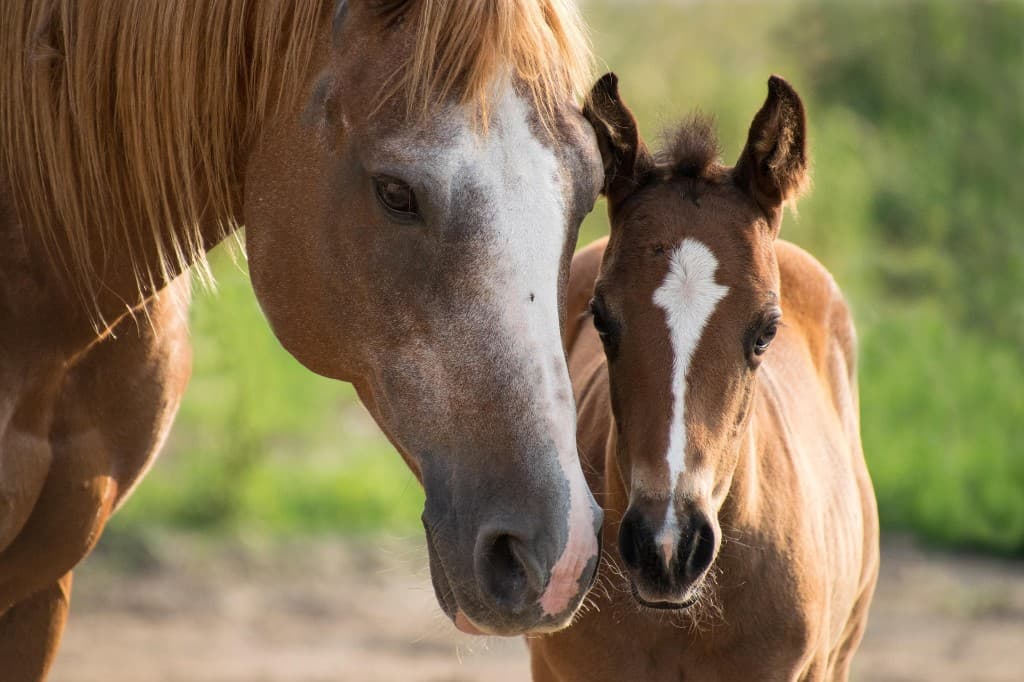
Weaning – the separation of mare and foal – ranks among the most momentous events in a horse's life.
Weaning – the separation of mare and foal – ranks among the most momentous events in a horse's life. The research is unambiguous: in a domestic setting, weaning is not only a nutritional break. It dissolves a strong social bond, and that brings considerable psychological stress for the foal – worse still when the split is abrupt.
The physiological signs are well documented. Studies show that foals weaned artificially display several physiological and behavioural stress responses, including weight loss, raised cortisol, vocalisation and increased movement.
The method matters a great deal for how much stress the foal experiences. A review of the evidence concludes that abrupt weaning is more stressful than gradual weaning in which the foal keeps scent, sight and sound of the mare – and that the same holds for the form of gradual weaning in which mares are taken out of a group one at a time.
A detailed behavioural study found clear differences in the acute reaction: abruptly weaned foals vocalised more often and did not lie down on their sides in the first five hours after weaning, unlike gradually weaned foals. The same research noted, however, that foals in both groups showed aggression towards other foals, sucking without feeding, and an absence of play as signs of stress, regardless of treatment group – which shows that some stress is hard to avoid altogether.
Cortisol is the marker most often used to measure stress in foals objectively. A study of trotter foals found that cortisol levels stayed stable after a protocol of gradual separation from the mare and social support from familiar adult horses, suggesting that the method can reduce weaning stress – even though some changes in inflammatory markers were still observed.
Heart rate supplies further evidence. Research has shown that heart rate rose significantly on the day of weaning and stayed elevated through morning, midday and evening observations, with the highest average heart rate recorded immediately after weaning. The same study found sex differences: fillies moved more after weaning, especially at the midday and afternoon observations, and had higher cortisol on the morning after weaning than colts.
Being left alone makes the stress considerably worse. Research consistently shows that individual weaning – keeping the foal on its own afterwards – is generally more stressful than when the weaned foal has the company of at least one other foal, even if a few studies nuance the picture depending on group size.
An often overlooked point is that weaning is sometimes combined with a move to a new yard. Research that looked at this specifically found that the change of place may be an even greater stressor than the separation from the mare itself – and that staggering weaning and the move, rather than doing both at once, had a more negative long-term effect on the foals than if both events happened together. It is a somewhat counter-intuitive finding, and it points to the need for further research.
At Hästannons we believe welfare and responsible ownership belong together – whether you buy, sell, breed or ride. Read on in the series, and in our practical guides.
Yes – the research clearly shows higher stress when weaning is abrupt and the foal loses contact with the mare.
No – company with at least one other foal reduces stress compared with being stabled alone.
Research suggests that separating the events in time can produce worse long-term effects – plan carefully.