
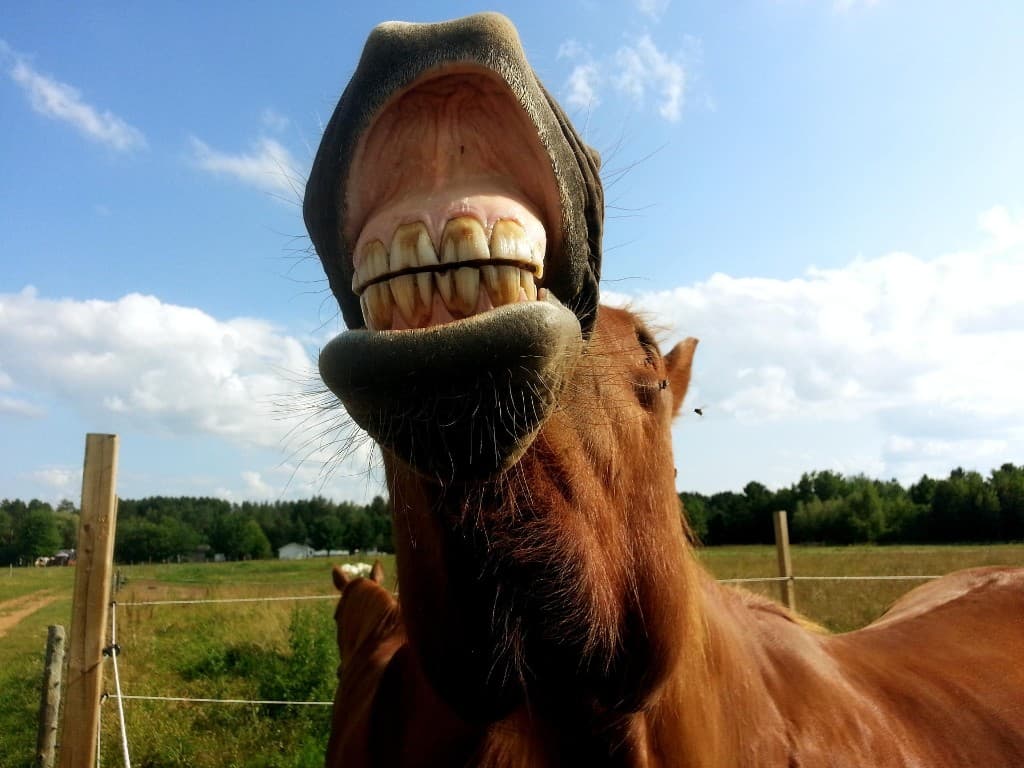
Dental disease and gut parasites are among the most underestimated health problems in the horse – partly because they rarely show on the outside, and partly because the signs are easily put down to something else.
Dental disease and gut parasites are among the most underestimated health problems in the horse – partly because they rarely show on the outside, and partly because the signs (weight loss, poor feed conversion, recurring colic) are easily put down to something else.
A British practice study of 932 horses in first-opinion care gave a clear picture of the scale. The researchers found active periodontal disease, diastemata (gaps between the teeth) and peripheral caries in 13.9, 8.7 and 8.2 per cent of the population studied. The study concludes that dental disease in the horse remains a widespread condition in domesticated horses, with the potential to cause substantial welfare problems if it is not found and treated.
Gut parasites, especially cyathostomins (small redworms) and large redworms, are one of the most important underlying causes of colic. Research describes the historical picture: wormers introduced in the 1960s contributed strongly to better horse health and welfare, with potentially serious consequences if control fails – large numbers of cyathostomins in the large-intestinal wall can cause fatal colitis if encysted parasites emerge at once, and migrating Strongylus vulgaris can cause severe colic.
Decades of routine worming have created a serious resistance problem. An Irish study of 44 horse farms found widespread resistance to benzimidazoles and signs of resistance to ivermectin and moxidectin – two of the most widely used classes of drug. One researcher puts the seriousness plainly: 'the continued indiscriminate use of wormers is like shooting ourselves in the foot', noting that no new wormers are in development.
The background to the problem is clear. Research shows that most competition horses are wormed four or more times a year to improve performance, which has contributed to the growing problem of resistance to wormers.
The industry is moving towards a more individualised approach. Research describes the shift: routine worming of every horse through the year is now being replaced by more sustainable methods that take account of the need to keep an adequate parasite reservoir (refugia). This approach, called selective therapy, rests on the fact that the relative level of egg shedding (faecal egg count) in an individual horse is a fairly stable trait, which gives a reliable basis for selective treatment – that is, worming only the horses that actually carry a high parasite burden, rather than the whole herd.
Some groups are at particularly high risk whatever the strategy. Research identifies that young horses (under five years) and older horses (over 20 years), as well as animals with concurrent disease, are more susceptible to high parasite burdens that can have clinical effects.
At Hästannons we believe welfare and responsible ownership belong together – whether you buy, sell, breed or ride. Read on in the series, and in our practical guides.
At least yearly for most horses; older horses and those with known problems may need more frequent checks.
Widespread resistance to common products makes selective worming on the basis of a faecal egg count the recommended strategy.
Young horses (under five years), older horses (over 20 years) and individuals with concurrent disease.